Posted on: May 26th, 2026 | 10 Sivan 5786 by Special to the Chronicle
Book reviews for kids from Liza Wiemer, longtime local Jewish educator
“A Place to Pray: A Tale of Friendship and Community Inspired by a True Story,”by Doreen Klein Robinson, illustrated by Yuke Li, published by Worthy Kids.
Inspired by the actions of Rabbi Joshua Stanton of East End Temple in New York, this touching and beautifully illustrated picture book shows the importance of community. After the Middle Collegiate Church burned down in 2020, the rabbi offered the use of the temple for the church’s services. Told through the perspective of two children – one a member of the temple and the other a member of the church, readers will be moved by the kindness, respect, and tikkun olam.
“Tractor Zack on Sunshine Kibbutz,”by Alice Bluementhal McGinty, illustrated by Rotem Teplow, published by Kalaniot Books
Tractor Zack loves to serve his community, but as the tractor ages, he isn’t able to do all the work he once could. Will he no longer be needed? Read this adorable, joyful picture book to find out what happens! The story delves into kibbutz life, the celebration of Shavuot, and one’s value and purpose. Filled with compassion and heart, this book will have extra appeal for any child who loves Thomas the Tank Engine.
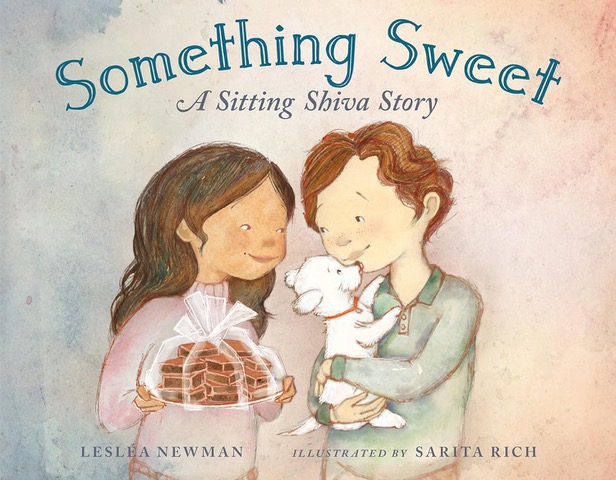
“Something Sweet: A Sitting Shiva Story,”by Lesléa Newman, illustrated by Sarita Rich, published by Charlesbridge
When Joshua’s grandpa passes away, his friend Lizzie wants to comfort him. But how is that done? What happens at a shiva house? How should you act and what should you say to comfort a mourner? This picture book does a phenomenal job of showing what takes place when someone is sitting shiva. The thoughtful, touching, relatable, and lyrical prose is supported by illustrations that convey the seriousness and emotion of this lifecycle event. Back matter delves into the Jewish practices for shiva. An important and valuable title for children K-5+. Read the book before you share it with your child to prepare for questions.
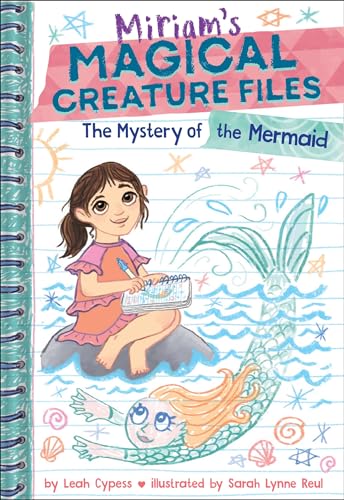
“Miriam’s Magical Creature Files: The Mystery of the Mermaid,” by Leah Cypess, illustrated by Sarah Lynn Reul, published by Amulet Books
This is the third book in this easy reader series, and it’s another winner. It is filled with humor, heart, Jewish joy, and mystery. When Miriam’s family vacations on Mermaid Lake, Miriam is skeptical about the existence of mermaids. Kids will love the detective work, the fantastic illustrations, and the family dynamics. Don’t miss this series for ages 4 and up.
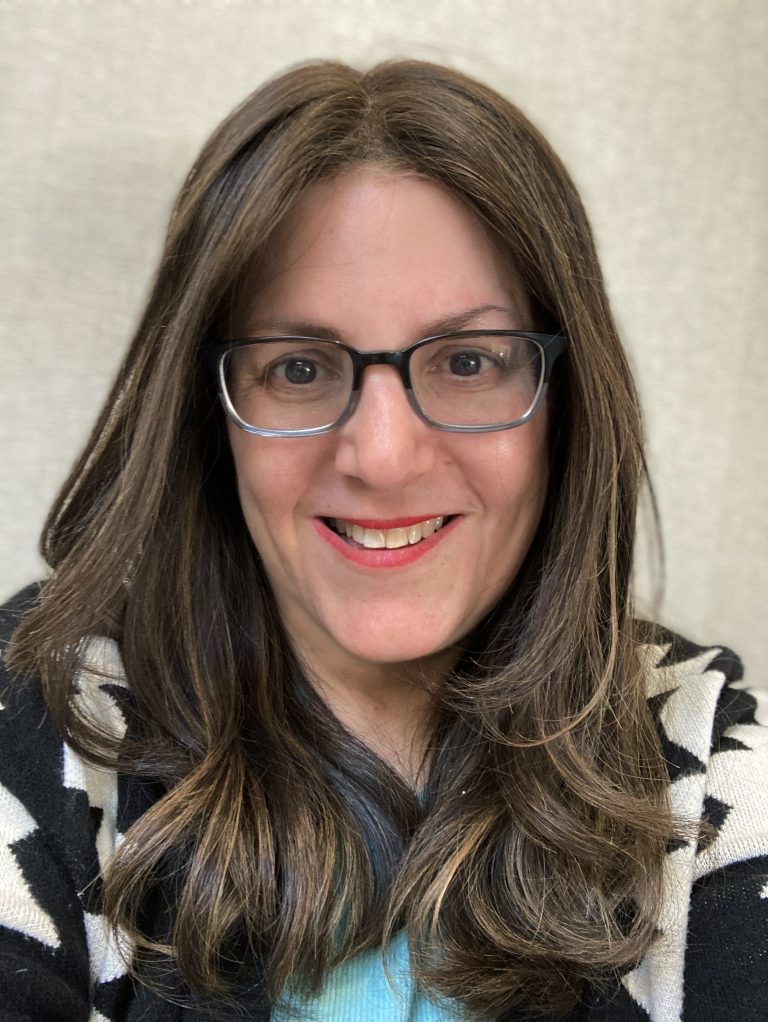
The Chronicle “Book Corner” column is by author Liza Wiemer, of Fox Point, who has taught in nine of our Milwaukee-area Jewish religious schools and day schools. She is a board member at the Nathan and Esther Pelz Holocaust Education Resource Center.Her picture book, “Out and About: A Tale of Giving,” is appropriate for ages 2 and up.
Posted on: May 21st, 2026 | 5 Sivan 5786 by Special to the Chronicle
Grief and hardship, as told by a family man
Children scrambled to and fro as the sound of community filled the air at a Congregation Shalom family Shabbat, but the Seigels were in their own bubble, sitting expectantly.
“Sammy, my older one, who will turn 7 in a couple of months … [was] like, ‘When are they going to say his name?’ And I said, ‘Very soon, but, you know, hang in there.’ And then they did,” Matt Seigel said.
The name they were waiting to hear was that of Benjamin Gino Seigel. This was the yahrzeit of the Seigels’ first son, who died nine years ago at only 17 days old. The Seigels faced much adversity along the road to building a family. They worked through grief, physical and mental hardships, financial burdens, and the devastating loss of Benjamin.
Moved by it all, Matt Seigel recently published a memoir titled “Not How I Drew It Up: One Man’s Unthinkable Journey to Fatherhood,” which shares the story of his family’s long and strenuous fertility journey. He seeks to aid others facing similar struggles.
Infertility affects one in six people, but “for men in particular, it’s not talked about much at all,” Seigel said. “People say, ‘Hang in there.’ ‘Stay strong.’ You’re supposed to be the tough guy and support your partner. And you can do all of those things, but … I don’t find [bottling up your feelings] to be the best way to go about processing.”
While Seigel published “Not How I Drew It Up” to help all people facing fertility struggles, he particularly targeted it towards the partners of childbearing individuals. “I wanted to put this out there to let other people know that they can be seen and heard and relate to somebody who’s been through it.”
Learn more about “Not How I Drew It Up,” including upcoming events and how to get a copy of the book, at NotHowIDrewItUp.com.
Seigel supplemented his memoir with intermittent advice and resources for new or attempting parents, “that hopefully can help somebody avoid some of the perils that we encountered,” Seigel said.
“Despite the tragedy that exists in this story, there were some really good things, you know, obviously two really good things, to come out of it,” said Seigel.
These “two really good things” are turning 7 and 3 this year. “I feel very grateful for the boys that I have here on Earth,” Seigel said.
The Seigels and their community continue to keep Benjamin close in their hearts.
Shortly after his passing, Congregation Shalom announced their new ‘Benjamin Gino Seigel Early Childhood Fund,’ which supports their youth programs, including the family Shabbat the Seigels attended on Benjamin’s own yahrzeit.
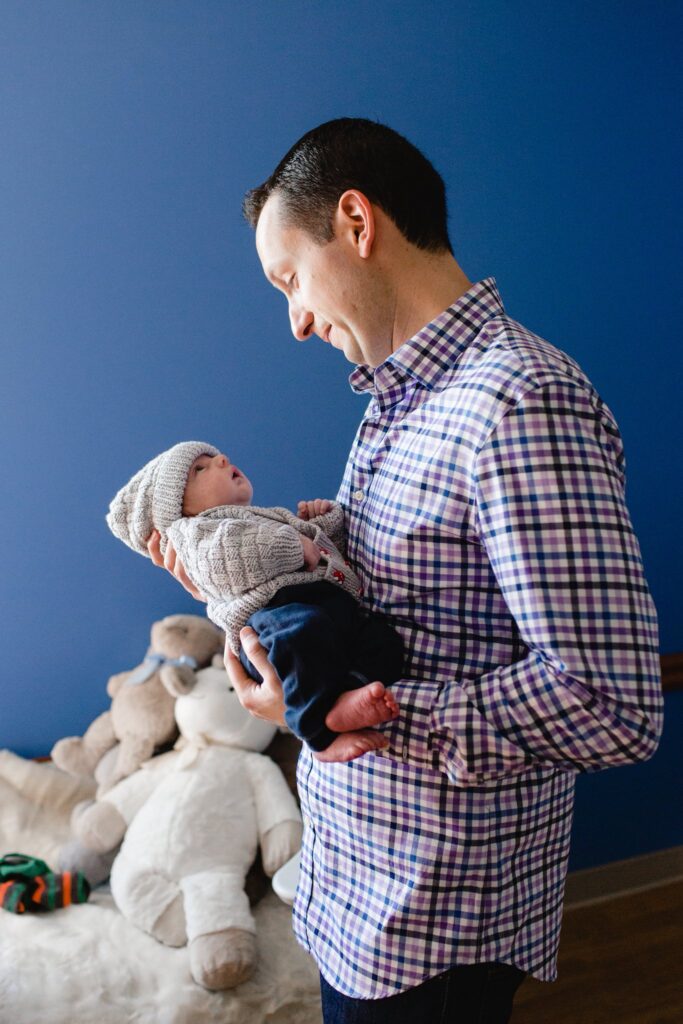
Matt Seigel with his son, Benjamin, of blessed memory.
Posted on: May 21st, 2026 | 5 Sivan 5786 by Rob Golub
Your Jewish newspaper editor also wants to repair the world
As I’ve mentioned before, I’ve become more active in the journalism community, speaking at conferences about what I call “emotional engagement of a journalism audience.” Yes, that’s you.
The idea is simple. A community news service must serve its community and think about the experience of its readers to earn trust in a polarized and truth-challenged society. I’m not claiming perfection, or that every reader trusts me completely. But I can say I see the goal, and I’m encouraged by the feedback I receive.
Promoting emotional engagement in journalism has become my personal tikkun olam project. So has training new journalists, something I’ve been doing for 20 years.
Some people know how to make a three-layer cake. I don’t, and mine would be terrible. But I do know how to make journalists. I’ve been doing that, semester after semester, through our internship program. If you’ve ever been interviewed by a nervous Chronicle intern, thank you. These young people apply from all over the country to join our highly competitive program, and what they learn benefits all of us.
Tikkun olam begins with the idea that something is broken. There is much in need of repair. Here is what I see, from my vantage point as a trainer of journalists, a participant in journalism conferences, a former editor at The Journal Times in Racine, and your editor for the past ten years.
Truth is at risk, and journalism knows it. We are all talking about it. Artificial intelligence, deepfakes, and the information silos of social media are making it harder to know what is real and whom to trust. When we are not even seeing the same news, we cannot be sure what others believe or understand.
I urge my fellow journalists to focus more on earning trust within their communities. That requires a shift in culture across the industry – I know, a lofty goal.
Also, the next generation needs human attention. Academia plays an important role, but on-the-job training has weakened. There was a time when a newsroom was filled with reporters, and experienced journalists would take younger ones aside and say, “Let me tell you something about your story.” Today, many newsrooms are smaller or gone. Experienced journalists have moved on or work remotely. New reporters, if they are lucky enough to be hired, often work alone from home.
Our industry tradition of mentorship is on the ropes. That is why I encourage journalists to create and support internship programs. We must pass on what we know. This need extends beyond journalism, especially as artificial intelligence replaces some entry-level work.
The next generation is remarkable. Despite what you may hear, they are not defined by screens. They are smart, capable, and caring. They have access to knowledge and tools far beyond what earlier generations had. I remember growing up trying to make sense of the small things. Imagine having today’s resources. In that sense, I envy them.
But I am not impressed with the world we are handing them, and that is what drives me.
We’ve got a Tikkun Olam special section in this edition (p. 13), and a great note from leadership at Tikkun Ha-Ir (p. 28). Feel free to draw inspiration from others in our amazing community! I know I do.
As the sages teach, we may not finish the work, but neither are we free to desist from it.
Rob Golub is editor of the Wisconsin Jewish Chronicle.
Posted on: May 20th, 2026 | 4 Sivan 5786 by Rob Golub
One moment in the ten-year-old Repairing Together program, aimed at a better Milwaukee and a more tolerant world
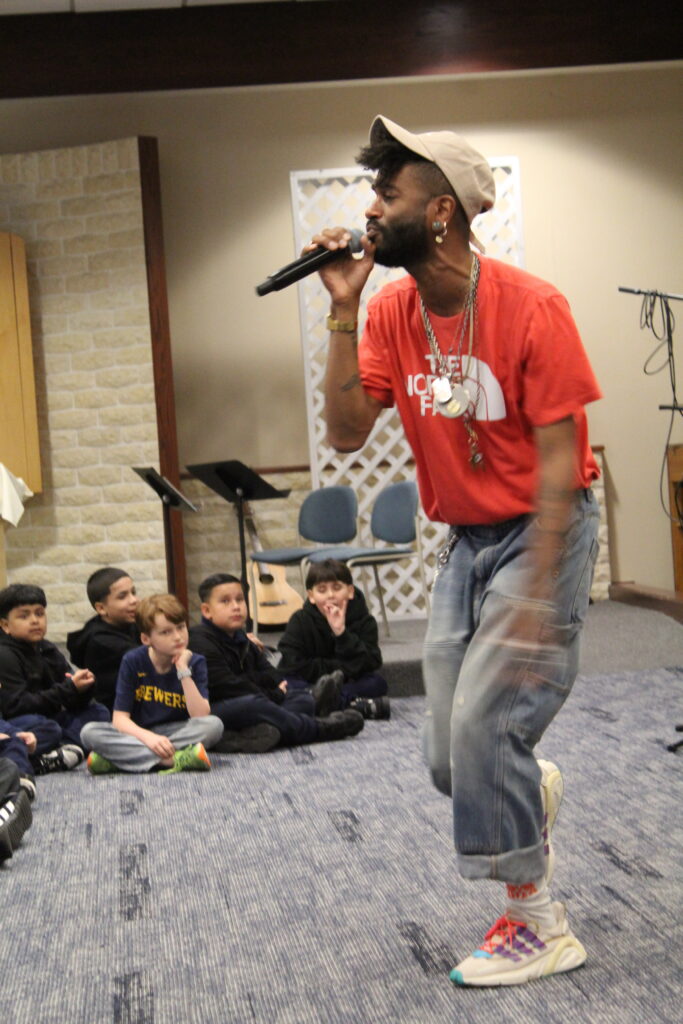
MILWAUKEE – Kellen Abston, the hip-hop performer who goes by “Klassik,” told the kids that he was here today on his birthday.
He added that there was nowhere he’d rather be.
The Milwaukee showman – who infuses his work with soul, jazz, storytelling and a healthy dose of impressive falsetto – does youth engagement workshops at schools, museums, and elsewhere. This one was special.
At Milwaukee Jewish Day School on April 15, he performed for its students and children from Bruce-Guadalupe Community School in Walker’s Point, which serves a predominantly Hispanic population. He was there for a better Milwaukee, to bring different worlds together.
But “performed” isn’t quite the right word. It would be more accurate to say he took complete control of the energy in the room. Klassik spun around the room like a top (or a dreidel?), pointing at a child and singing “I’m going to celebrate you,” then onto the next child for more celebrating in a flash, holding the attention of a roomful of kids. Pouring energy into every word, he sang in falsetto: “We are all connected; and in many ways the same; but the things that make us different; we don’t need to be ashamed.”
The fifth-grade students were led to sing along at times, then broke into groups comprised of students from both schools, to work on projects. That’s the key – repeatedly, at different moments, the students were told to pair up with kids from the other school. And these kids will all see each other again, at another program in a couple of months or so.
“The main thing that we do is we do what we call ‘culture shares’ where they go to one school or the other, and the whole school teaches about some sort of element of their culture,” explained Bobby Ehrlich, a Jewish studies teacher and a coordinator for Repairing Together, just before Klassik’s performance shook the room. “So we’ll teach about Chanukah or Yom HaShoah or Purim, and they’ll teach us about Día de los Muertosor their language just or we’ll do an activity about Latin American countries in history.”
In a world and a century that can feel defined by division and discord, these sessions are each just one more step in Repairing Together’s continuing effort to achieve something better for the next generation. For ten years, Repairing Together, a program of MJDS, has been growing, working to bring the young people of Milwaukee together. (See story, page 15)
April 15 was what one session looks like on the ground – literally.
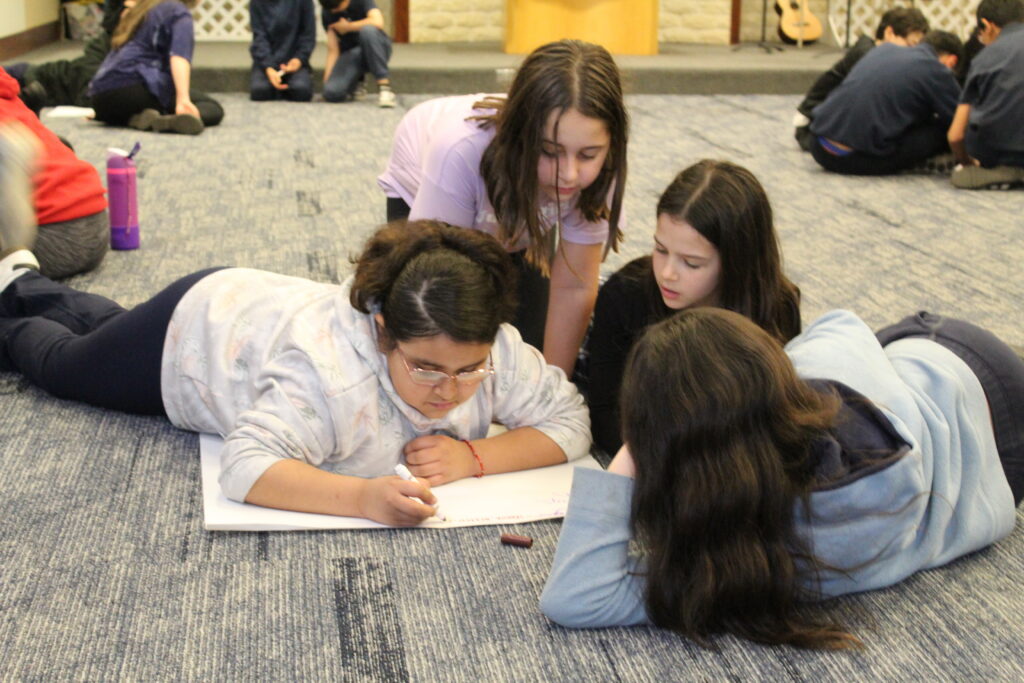
Kids got on the floor for their projects, writing words representing cultural understanding on giant sheets of paper. The kids became engrossed, scrawling feverishly, side-by-side, scrunched up against one another, as though differences in America don’t matter in the slightest.
Klassik danced at Milwaukee Jewish Day School, to bring kids into his presentation on the celebration of people and their differences.Harper and Josephine, Milwaukee Jewish Day School kids in back, worked with Camila in front from Bruce-Guadalupe Community School, on their culture-word sheet.
Posted on: May 20th, 2026 | 4 Sivan 5786 by Special to the Chronicle
Since 2016, Repairing Together has been working to create a more interconnected Milwaukee
Segregation in schools was declared unconstitutional in the United States 72 years ago, but in some ways, Milwaukee remains effectively segregated.
No local would be terribly shocked to see that their school-aged child only has friends who look, or pray, like them.
Concerned, Elsie Crawford, a Milwaukee Jewish Day School employee, founded a program called Repairing Together 10 years ago, to foster more kinds of friendships.
The initiative, which has grown from hosting a cohort of 80 students in its first year to over 1,000 in 2026, aims to foster connections among children from different cultures, forming a more interconnected and tolerant Milwaukee.
Repairing Together is a collaborative effort, comprising of students from MJDS, Indian Community School, Bruce-Guadalupe Community School, and Martin Luther King, Jr. Elementary School. Crawford is the Repairing Together project director.
Milwaukee is one of the United States’ most segregated metropolitan areas, with a ‘dissimilarity index’ of 78%, according to the Brookings Institution. This means that for the different races and ethnicities to be evenly distributed across Milwaukee, 78% of residents would have to relocate.
However great, it wasn’t always easy to get students interested. “In the beginning, I had to shove [students] out of the door,” Crawford admitted.
But by the end of only one day, MJDS students were excited to tell Crawford that they were all currently completing the same unit in math, and that the Hebrew morning prayer is similar to that of the Oneida Nation, she said.
“What makes the four schools that participate so special is that they all focus on really developing the students’ [cultural] identities,” said Rabbi Joshua Herman, head of school at MJDS. “We get to do that within our own schools separately, but then we get together, and … get outside of that little bubble, and all of a sudden, students start to look at their own identities in a different light.”
Herman recalled once listening to an interview with a psychologist who studied the process of changing someone’s mind. “It’s not impossible,” he recalled the psychologist said, “but nearly so unless you have a 20-year or longer relationship with the person whose mind you are trying to change.” By beginning this work when children are still young, tangible change will begin to arise by the time they are young adults, Herman said.
In recent years, Repairing Together has expanded not only in the number of students but also in the frequency of programming, the diversity of curriculum, and the relationships with other Milwaukee-based organizations. Some of the activities that they have recently led include cultural museum tours, student-led presentations about holidays and traditions, and workshops led by local activists and artists.
“With how the world is turning, there are more roadblocks than ever preventing kids with different backgrounds from getting to know each other.”
– Elsie Crawford
“It doesn’t matter what background you’re from when you talk about your family, your traditions, your holidays,” said Crawford. “It takes away the fear of the other. You become more humanized.”
Although they all live in separate sections of Milwaukee and attend different schools, the kids have a lot more in common than they realize, Navarro said.
“Being 12 years old is really hard,” Herman said. “Doesn’t matter if you’re Black, white, Latino, Native American – it doesn’t matter. It’s hard.”
“I don’t have the arrogance to say that Repairing Together can solve all of our problems,” Crawford said. “But it seems to me that it can’t be a bad thing to start with young children and build upon the trust that you get year after year.”
“I would like to see this in more cities, actually, because if it works in Milwaukee, it can work anywhere.”
Posted on: May 13th, 2026 | 26 Iyyar 5786 by Special to the Chronicle
Dr. Jerrold Weinberg wants to change the way we think about menopause medicine
Twenty-five years into his career as an OBGYN, a book came across Dr. Jerrold H Weinberg’s desk. It was an informational guide on menopause by television actress Suzanne Somers, titled “Ageless.”
The book claimed benefits to taking bioidentical hormones – something that Weinberg had never heard of before. He nearly disregarded it, but his wife pushed back. “Look, if you’re going to be having all of these menopausal patients who are going to ask you about this, you might as well know,” Weinberg recalled her saying.
So, loyally, he picked up Somers’ guide. What he didn’t know then was that it would change his perspective on menopause forever.
The doctor, who recently published a book of his own, called “Menopause Mended,” spent the rest of his career, and now the beginning of his retirement, devoted to being a “disruptor,” he said. He has built off of notions from Somers and doctors in her book, challenging mainstream menopausal care.
“Many of us wear glasses. We have hearing aids,” Weinberg said. “We have a lot of devices to keep us going, because various organs in the body give up and run out at certain times. If you live long enough, you’re going to experience a lot of things, and menopause is one of them.”
However, he continued, no doctor would tell a patient who is hard of hearing to simply suffer through their symptoms. They would give the patient hearing aids or attempt another treatment. “It’s exactly the same with menopause. You just need to be back on the hormones.”
Weinberg faced significant pushback to this idea, largely because research shows that hormone use can come with an increased risk of stroke, heart attack and certain types of cancer. Although Weinberg only prescribed bioidentical hormones, which he believes do not cause many side effects, some peers stopped referring patients to him. Associates refused to refill his patients’ prescriptions when he was on leave.
The Mayo Clinic is also cautious on bioidentical hormones, writing on its site in October 2024: “The hormones marketed as ‘bioidentical’ and ‘natural’ aren’t safer than hormones used in traditional hormone therapy. And there’s no proof that they work any better at easing menopause symptoms.”
Hearing these kinds of objections “was very tough,” Weinberg said. “What kept me going was that the patients were doing so well that I said [the other doctors are] wrong.”
When he retired, many of his long-term patients lost access to their prescription hormones altogether. “I decided the only way I could perpetuate my program was to write a book,” Weinberg said.
Weinberg is now retired and living in Milwaukee with his wife, where his daughter and son-in-law, Susan and Todd Richeimer, live with their four children.
“Hopefully, some physicians will see my book or my website, and will contact me and say, ‘What’s this about?’” Weinberg said.
Even now, the doctor admits surprise at taking medical advice from an actress. “Three’s Company” had cast her as a stereotypical “dumb blonde.”
But when Weinberg looked into her claims, that’s exactly what he did.
Posted on: May 13th, 2026 | 26 Iyyar 5786 by Special to the Chronicle
Here are ten things I’ve learned, leading a local organization focused on tikkun olam
It has been a truly great honor to lead Tikkun Ha-Ir as the executive director for close to ten years. I know I have grown a lot, and I still love to continue to learn about new ideas and new stories of amazing Milwaukeeans doing their part. Here’s some of what I’ve learned, some of which might be helpful to others, as I’ve worked to do tikkun olam through Tikkun Ha-Ir for nearly a decade. Let’s all keep working to repair our world, our city, together.
You don’t have to do it alone. There are moments this work feels like the little engine that could. But when you surround yourself with people who bring expertise in their own right, so much more becomes possible. This means staff, partners and volunteers. There is no doubt our amazing staff, board and leadership council have shaped me into the leader I am today, and the way that Tikkun Ha-Ir extends its impact.
Being a mom shapes how I lead. I was already a parent when I stepped into this role, but motherhood has continued to deepen my perspective. I work for the kind of world we all want for our children.
Jewish identity is lived through action. We’ve seen more and more people connect to Jewish life through hands-on acts of justice, service and community care. With programs like Good Deeds Days, Veggie Chop Shop, and Getting Out the Vote work, we create space for people to do their Judaism. I always knew that Jewish identity is lived through a combination of study, spirituality and action, but these last ten years have really driven that point home.
Creativity matters. So does failure. Some of our most meaningful programs grew from experimentation: Tu’BiShvat Seders, the food justice learning series, and “Veggie Chop Shop on the Go.” Not everything worked the first time, and that’s part of the process.
We have to move beyond transactions. It’s not just about how many meals we serve or volunteers we mobilize. It’s about belonging. At events like our Sukkot Food Justice Farm Party or the community Interfaith and Freedom seders, we’ve seen what happens when people feel part of something deeper.
Collaboration is essential. Our partnerships, whether through Veggie Chop Shop or community programs, only work when we listen deeply. The strongest collaborations have come when we build with others and create something together that is bigger than any one of us could have imagined.
The work of racial justice is ongoing. Milwaukee remains one of the most segregated cities in the country and as a Jewish community, we have a responsibility to not just look inward but continue to build relationships across lines. This work asks us to stay, even when it’s hard.
Go to every part of Milwaukee. “I don’t go to that neighborhood” is a mindset we have to unlearn. Over ten years, I’ve seen how much opens up when we approach the city with new eyes, new understanding, and a fuller sense of community.
We have to hold both internal and external conversations about antisemitism. Antisemitism is real and rising in the broader community, and we must be clear in confronting it. We don’t always agree on how to name or respond to it. Yet tikkun olam requires us to stand firmly against hate while engaging thoughtfully with one another.
Gratitude sustains everything. For the founders who imagined this organization. For the “keepers” who carried it forward. And for every volunteer, donor, and partner who show up again and again, this work exists because of you.
After ten years, I don’t have a neat conclusion. Tikkun olam isn’t something we finish. It’s something we practice, together, imperfectly, and with hope.
Posted on: May 13th, 2026 | 26 Iyyar 5786 by Special to the Chronicle
At University of Wisconsin-Madison, an anti-Israel resolution muscled through the process is a sign of the times in divided America
Rep. Jianda Ni refused to support an anti-Israel resolution in University of Wisconsin-Madison student government, because he believes in focusing on having a safe campus and serving everyone, not divisive international politics.
After he spoke his mind on this, at a meeting, the resolution was quickly pushed through the legislative process, appearing to bypass pro-Israel students. It ultimately passed.
Next, one of Ni’s friends from the anti-Israel side stopped speaking to him, even though Ni did not take sides in the Israeli-Palestinian conflict. Even though Ni says the conflict is nuanced and complicated. Even though Ni is not Jewish.
This is college in 2026. An alliance of left-leaning students appear to have muscled an anti-Israel resolution through the UW-Madison student government legislative process, despite objections from students that the resolution would resolve nothing overseas and contribute to fear and antisemitism on campus.
Antisemitism at a great Jewish campus
Student government at Madison is called “ASM” – Associated Students of Madison. The University reported in a March statement on the anti-Israel resolution that administrators were “reviewing reports alleging that an online chat, including possibly some ASM representatives, used an antisemitic term in reference to limiting potential speakers (at a meeting).”
Though the resolution named Israel, not Jews explicitly, it felt to some students like it was aimed at Jews. Consider it within the larger campus climate, at a campus that has been one of the great magnets for Jewish students from around the country, with multiple Jewish organizations active on campus. But it’s a campus in modern America.
Ian Braun attended two ASM meetings on the resolution, one that introduced it and one that passed it. “As someone who has family in Israel, I felt I was obligated to stand up to what I thought was antisemitic,” said Braun, a freshman who grew up in a small town with few Jews in New Jersey. The issue, he said, is that an anti-Israel resolution opens the door to antisemitism.
Long before the vote, Braun was outside at Library Mall, sitting at a public table with a rabbi for Jewish Experience of Madison. Braun said the table had JEM signage but little-to-nothing related to Israel. Someone still walked up, didn’t take the time to look at the table in detail, and said: “Free Palestine.”
“So to me, that experience really demonstrates the conflation of Jewish identity, and the assumption that people think you support Israel,” Braun said.
And yet Jewish students still say they love Madison. Asked about that, Braun quickly said: “Go Badgers!”
Sophie Genshaft, the student president of UW-Hillel added, “I also feel like a lot of people just pick a side, and usually it’s the pro-Palestine side, and they don’t actually know what they’re talking about.” Aaron Seligman, director of community relations for UW-Hillel, said people seem to think if you’re pro-Israel, you’re anti-Palestinian, and, of course, that does not follow.
Not hearing others
“I know some other representatives who actually either privately or subtly expressed their concerns over the resolution, but I knew they were going to be peer pressured into voting yes, or at least abstaining,” Ni said.
Students say there seemed like there was no desire on the other side to hear counter-arguments. But why? Why serve on student government if you don’t want to hear students?
The problem, said Ni, a third-year student at University of Wisconsin-Madison Law School, is the decades-long accumulation of social and economic problems in American culture.
“I think we are at a point where a lot of these problems can no longer be masked by economic growth,” he said. “I think we are really witnessing a disintegration of consensus that once held this society together.”
Based on his own reading and experience, he feels our culture is sliding into a kind of “friend” or “enemy” distinction.
“You’re from a different camp, and therefore, you know, there’s no need in engaging with them. There’s no value in what you have to say. There’s no point in hearing them or debating them.”
How it all unfolded
The resolution, with backing from Students for Justice in Palestine, was introduced March 18. It was then passed at a March 25 student government meeting. It did name other problems and countries in the world but was most focused on Israel. It passed 15-3, with 3 abstaining. The resolution calls for divestment, which the University quickly set aside in a statement issued the same day as the vote:
“UW–Madison is disappointed that the Associated Students of Madison (ASM) Student Council passed a resolution on Wednesday that issued a number of flawed, unrelated and illegal demands.”
“Wisconsin state law prohibits state and local government agencies from adopting their own rules or policies that would involve them in a boycott of Israel. Despite the fact that ASM leadership was counseled by university attorneys on the clear illegality of that specific part of the resolution, ASM Student Council nonetheless voted to pass it.”
Though most Jewish students at the meetings appeared to oppose the resolution, there were those who stood up to identify themselves as “anti-Zionist” Jews, Braun said.
Braun felt that these introductions were meant “to invalidate and discredit the experiences of the students on campus that do experience antisemitism.” Braun added that “their choice to say that kind of disgusted me, and I didn’t really appreciate it.”
The legislative jockeying
The resolution took two meetings to pass. At the first meeting, it seemed like there were more than 50 speakers, with three minutes each to speak, Braun said. Senior Yoni Greenspan alleged at the meeting that one student representative messaged that they didn’t want to “[extend] past the set 45 minutes” of speaker time because the “proportion of zios rises as the speakers list goes on,’ according to the Daily Cardinal.
The meeting lasted for hours, the building was closing at 10 p.m., and student senators decided to postpone the issue to a second meeting, Braun recalled.
Next, the second meeting was held on March 25. Dozens of students arrived to walk out in protest after one read a statement in opposition to the resolution. The idea was that they didn’t feel they were going to be heard anyway.
Seligman, from UW-Hillel, who assisted the students with their push-back initiatives, said he realized at the first meeting, when someone used the slur “zio,” that “this is a setup – they’ve literally stacked the deck here.”
Seligman added that after seeing how students were treated at the first meeting, he concluded that “this is not an honest debate where students are really interested in listening to the argument here or open to be persuaded.”
Ni voted to abstain and walked out with the group.
Before the walk out, one student, Ariav Hayempour, identified himself as a Jewish Iranian-American and read a statement that included:
An allegation that student representatives were caught using the word “zios.” “This is a term popularized by David Duke, the former grand wizard of the Ku Klux Klan. It is used to demonize Jews.”
“Zionism isn’t what you might think. It isn’t racism and white supremacy. It is the belief that the Jewish people have the right to establish their own country in their ancestral homeland, Judea.”
“The consequences of this moral blindness are not theoretical …. Synagogues, schools and community centers operate under heavy security, while Jews are forced to weigh the risks of gathering publicly simply as Jews.”
Later, Ni said he saw it this way: “This body is not interested in what we have to say. We are very disappointed. So, you know, we’re not going to entertain this, kangaroo parliament, and we walk out collectively. So, at that time I realized, indeed they are right, there’s no use in debating here, there’s no use in pushing back here.”
Ni wanted his fellow representatives to consider that Jewish students feared having more anger directed at them on campus, among other issues. “I didn’t think we should rush it through,” he said.
Ni recalled that some pro-resolution students told him privately that they knew the resolution would change nothing overseas. One student at the meeting acknowledged the risk of heightened antisemitism, but added that if this can free Palestine, it’s worth it, Ni said. Another suggested at a meeting, Ni said, that passing the resolution is the bare minimum, but at least it’s doing something.
“I was like, this is not doing something. This is pretending you’re doing something, but actually you’re doing nothing.”
Helena Birbrower contributed to this story.
Jianda NiIan BraunSophie GenshaftAaron Seligman, the director of community relations at UW Hillel
Posted on: May 6th, 2026 | 19 Iyyar 5786 by Special to the Chronicle
With more than 10 years of experience at JFS, Daniel Fleischman takes on new role
Daniel Fleischman, who has served Jewish Family Services for more than a decade, is the new president and chief executive officer, the nonprofit announced in a recent letter to the community.
Fleischman has served as the organization’s interim president and CEO for the last 10 months and held several other leadership positions in the years prior. However, his work in housing development and social services began long before he joined JFS. He spent nearly six years in Brooklyn, New York, working for Housing Works, an advocacy program born from the AIDS crisis that fights for inclusive care and an end to homelessness. Before that, he earned a master’s degree in urban planning from the Harvard University Graduate School of Design.
“Dan has led with clarity, compassion, and a deep commitment to the individuals and families we serve,” said Jason Steigman, JFS board chair, in the letter. “His leadership reflects both vision and practical expertise, and he has already made a meaningful impact during his time as Interim CEO.”
One project Fleischman oversaw as interim CEO was the opening of Woodale Crossing Supportive Housing Community. Woodale Crossing is a 56-unit affordable and supportive senior housing residence located in Brown Deer, with 25% of units dedicated to people with a disability who are at risk for housing insecurity.
“Woodale Crossing was designed to support residents in living independently while having access to services that help them thrive,” Fleischman said at the ribbon-cutting ceremony in July. “This community reflects our belief that stability, respect, and access to care should be part of every housing solution.”
Steigman expressed confidence in Fleischman’s ability to be a supportive presence. “The Board is confident that his vision and deep understanding of our community will guide Jewish Family Services into a strong and impactful future in our core areas of mental health services, social services, and affordable housing,” Steigman said.
About Jewish Family Services
Jewish Family Services of Wisconsin was founded in 1867 as the Hebrew Relief Society, created to help Jewish immigrants establish new lives in Milwaukee. The organization later evolved into Jewish Family Services as its programs expanded to meet changing community needs.
Posted on: May 6th, 2026 | 19 Iyyar 5786 by Chronicle Staff
For the first time, Milwaukee Jewish Federation will grant key young leadership awards for men and women at one event.
In prior years, separate events have been held to grant the Benjamin & John Nickoll Young Leadership Award, for men, and the Ann Agulnick Young Leadership Award, for women.
Both awards are presented to people under the age of 45 who demonstrate “exceptional leadership qualities, a deep awareness of and commitment to Jewish life, and a dedication to making a lasting difference through service,” according to Federation.
The Benjamin & John Nickoll Young Leadership Award was established in 1962, followed by the Ann Agulnick Young Leadership Award in 1963. Together, these awards have honored 138 young leaders over the past 65 years.
Although the awards have historically been celebrated on different timelines and in a variety of formats, for the first time ever, both awards will be presented together at a unified young leadership celebration, according to Federation. This inaugural joint event will take place on May 28, from 5:30–7:30 p.m, at South Second in Milwaukee.
The event will also feature the graduation of George Weinstein Fellowship Cohort 9.
Recipients of both the Benjamin & John Nickoll and Ann Agulnick Young Leadership Awards are selected by past award recipients.
For more information, contact Melissa Taylor, associate director of Women’s Philanthropy, at melissat@milwaukeejewish.org.
Posted in Community, Events, Local |
Comments Off on One event for leadership awards








 Loading ...