

We love cheering on Jewish writers, especially those with Wisconsin roots.
The following titles, highlighted by the Jewish Book Council, showcase the range and vitality of Jewish storytelling and scholarship. From middle-grade fiction to cultural history and contemporary novels, these books connect our local community to the broader Jewish literary world.
Links to the Jewish Book Council reviews are available in this story online.
1. Deborah Lakritz — “Things That Shimmer” (2024)
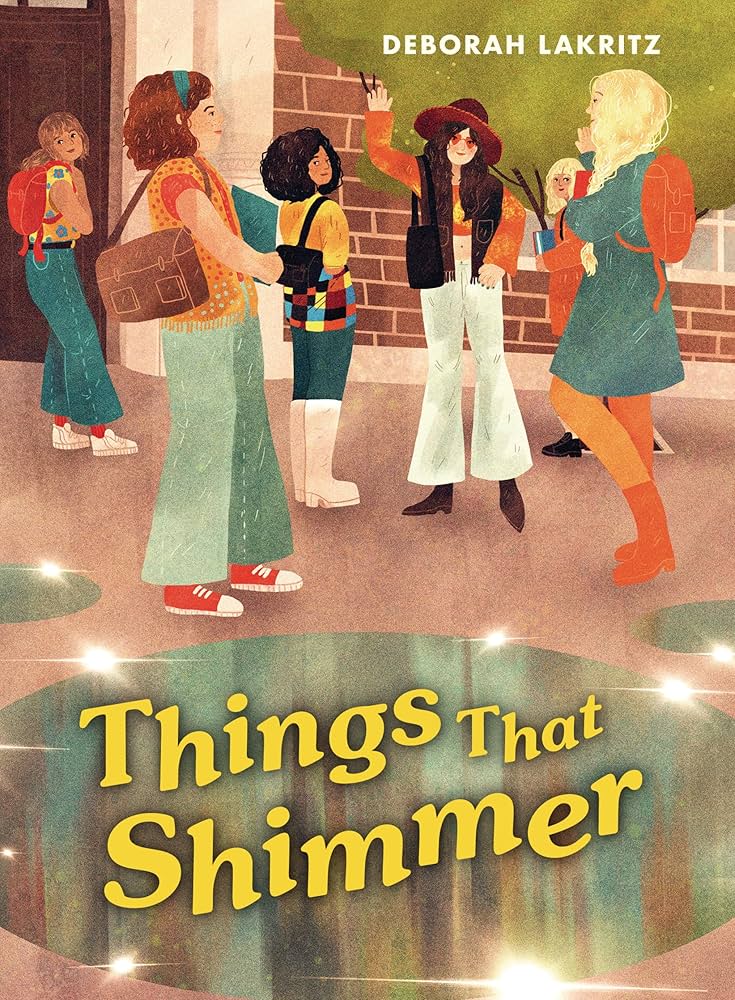
Milwaukee-based author Deborah Lakritz writes for middle-grade readers, and “Things That Shimmer” centers on an Israeli girl navigating shifting friendships, family expectations and questions of identity.
In its review, the Jewish Book Council writes:
“Set in the 1970s, ‘Things That Shimmer’ is about eighth grader Melanie Adler, who, like many girls her age, wants nothing more than to become a member of the Shimmers, her school’s in-crowd. Admission into this particular golden circle seems to Melanie to be the very pinnacle of success. She is painfully aware that her best friend, Vicky, is closer to that shimmering goal than she is, and she feels all alone.” Then, an Israeli girl enters the story.
Lakritz, a former social worker and mother of five children, writes emotionally resonant fiction for young readers, according to her site.
It may be an accessible entry point for readers of all backgrounds and an ideal pick for families, classrooms and book clubs.
Link to full review: https://www.jewishbookcouncil.org/book/things-that-shimmer
2. Jordan D. Rosenblum — “Forbidden: A 3,000-Year History of Jews and the Pig” (2024)
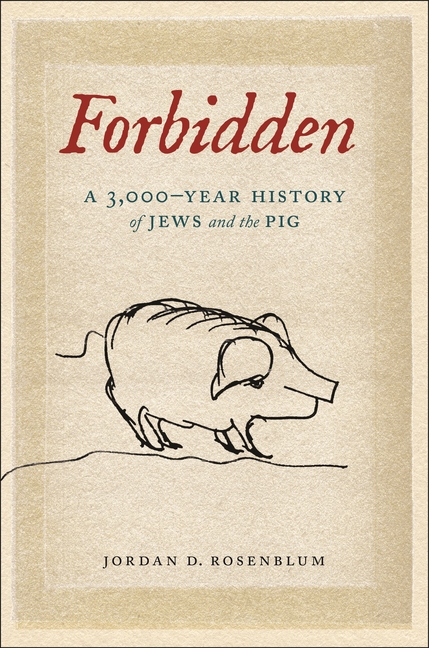
At the University of Wisconsin-Madison, Professor Jordan D. Rosenblum serves as the Belzer Professor of Classical Judaism and Director of Religious Studies. In “Forbidden,” he examines one of Judaism’s most famous dietary laws.
Jewish Book Council notes:
“For many Jews, the pig is not a formative part of Jewish identity. Yet according to Jordan D. Rosenblum, it is precisely the pig’s absence that makes it an integral part of Jewish history and identity. In his book ‘Forbidden’, Rosenblum explores the sometimes violent, sometimes hilarious relationship between Jews and the pig over the centuries.”
Drawing on ancient texts and modern cultural history, Rosenblum shows how food can shape group identity for millennia. Amazon describes the book as “expansive yet accessible,” offering insight into how identity can be shaped by what we eat — or refuse to eat.
Link to full review: https://www.jewishbookcouncil.org/book/forbidden-a-3000-year-history-of-jews-and-the-pig
3. Laurie Schneider — “Gittel” (2025)
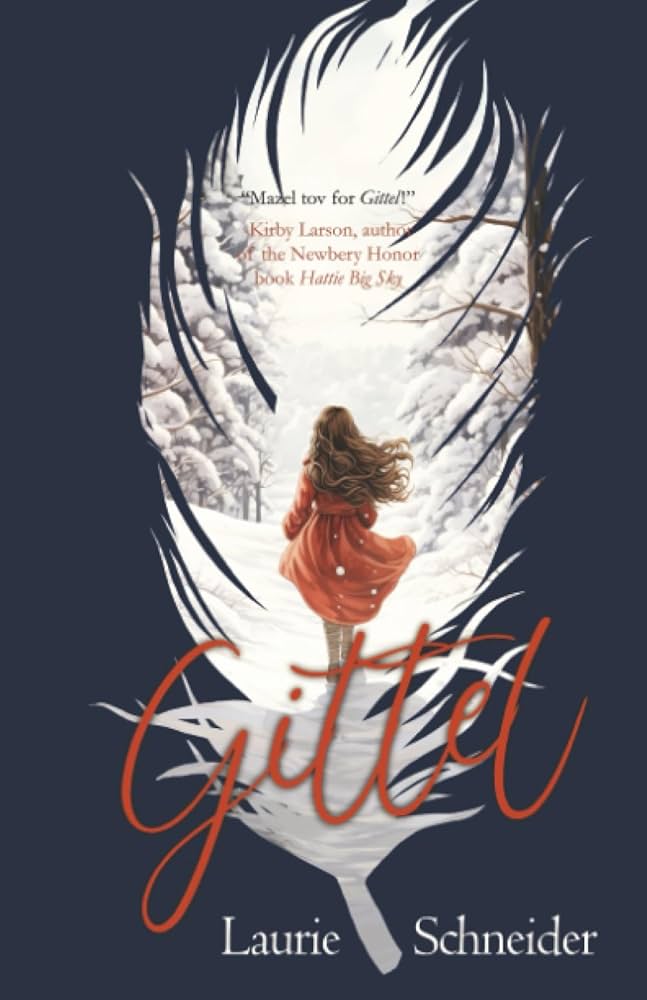
Set in rural Wisconsin, “Gittel” reflects author Laurie Schneider’s upbringing in central Wisconsin.. The novel tells the story of a young Jewish woman navigating life far from urban Jewish centers.
Jewish Book Council writes:
“This novel, geared toward older middle-grade readers, is about a Jewish girl growing up in rural Wisconsin in the early twentieth century. There’s a certain joy in reading about a slice of Jewish history that doesn’t often make it into children’s fiction, and ‘Gittel’ is a fine example. The story is based on the real-life community of Eastern European Jewish immigrants who settled in Mill Creek, a small town in Wisconsin. The new immigrants faced many challenges, and they struggled with a harsh and unfamiliar climate. Nevertheless, they managed to adapt to their new lives as farmers and survive as a tiny community of Jews among Christians.”
Sarah Aronson, author of “Just Like Rube Goldberg”, described the novel as “aA moving coming-of-age story of family, friendship, feminism, and finding your own voice,” according to Regal House Publishing. Aronson noted that “Schneider’s Gittel will introduce readers to a little-known time in American Jewish history. Prepare to be inspired.”
Link to full review: https://www.jewishbookcouncil.org/book/gittel
4. Simon J. Bronner — “Jewish Cultural Studies” (2021)
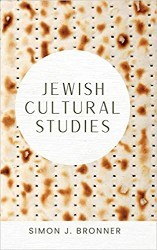
Simon J. Bronner, dean of the College of General Studies and professor of social sciences at the University of Wisconsin-Milwaukee, is a leading scholar of folklore and cultural studies, according to Penn State Harrisburg. His book “Jewish Cultural Studies” won the 2021 National Jewish Book Award for Education and Jewish Identity, earning recognition from the Jewish Book Council’s National Jewish Book Awards for its expansive and interdisciplinary approach.
Jewish Book Council writes:
“‘Jewish Cultural Studies’ charts the contours and boundaries of Jewish cultural studies and the issues of Jewish culture that make it so intriguing-and necessary – not only for Jews but also for students of identity, ethnicity, and diversity generally. In addition to framing the distinguishing features of Jewish culture and the ways it has been studied, and often misrepresented and maligned, Simon J. Bronner presents several case studies using ethnography, folkloristic interpretation, and rhetorical analysis. Bronner, building on many years of global cultural exploration, locates patterns, processes, frames, and themes of events and actions identified as Jewish to discern what makes them appear Jewish and why.”
Bronner’s work bridges academic rigor and cultural insight, demonstrating how Jewish life is shaped not only by theology or history but by lived experience, as noted by Wayne State University Press.
“In Jewish Cultural Studies, Simon Bronner caps a lifetime of research about Jewish life and lore with an original, provocative cultural perspective that changes the way people think about what Jews do, say, and feel,” said Haya Bar-Itzhak, co-editor of the “Power of a Tale: Stories from the Israel Folktale Archives,” in a review. Bar-Itzhak added that “Breaking new ground for a fertile field of inquiry, it will surely inspire intellectual excitement and provide a basis for the ways that Jews are studied and understood.”
Link to full review: https://www.jewishbookcouncil.org/book/jewish-cultural-studies
5. Zhanna Slor — “At the End of the World, Turn Left” (2022)
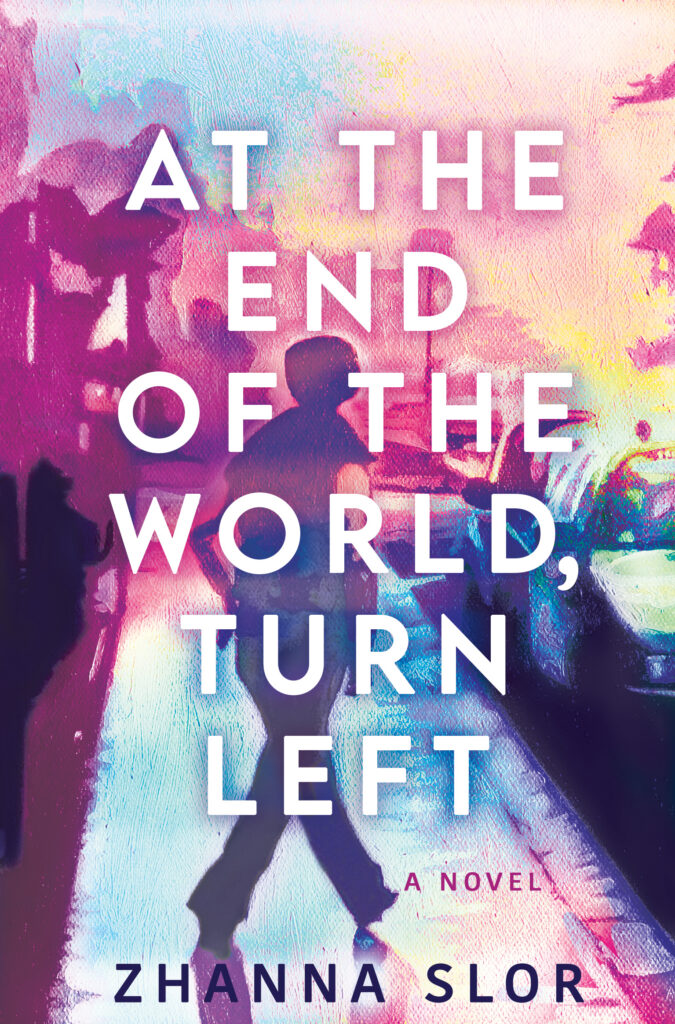
Set in Milwaukee, Zhanna Slor’s debut novel follows a young Ukrainian immigrant navigating family expectations, ambition and belonging in the American Midwest, while leaving her newfound home in Israel. Her novel, “At the End of the World, Turn Left,” was deemed “elegant and authentic” by NPR and recognized by Booklist as one of the “Top Ten Crime Debuts” of 2021.
Jewish Book Council notes:
“Part mystery, part family drama, Zhanna Slor’s ‘At the End of the World, Turn Left’ is a thoughtful examination of how we carry our history with us. The novel focuses on two sisters, Masha and Anna. Masha, who is in her mid-twenties, has returned home to Milwaukee from Israel at the behest of her father to look for Anna, who has disappeared. Masha escaped her home country in the hopes of forging her own path abroad. To tell the story, Slor bounces back and forth in time, weaving together Anna and Masha’s first-person narratives. Though the sisters share some similarities, Slor gives them both a unique voice and personality.”
According to NPR, Milwaukee serves not just as a backdrop but as an integral part of the narrative, shaping the characters’ experiences and sense of identity. Readers who appreciate character-driven literary fiction, especially stories about immigration, identity and complicated family dynamics, may find it both witty and emotionally resonant.
Link to full review: https://www.jewishbookcouncil.org/book/at-the-end-of-the-world-turn-left
The Chronicle is grateful to the Jewish Book Council for their permission to use portions of their reviews. For more, visit JewishBookCouncil.org.


 Loading ...