

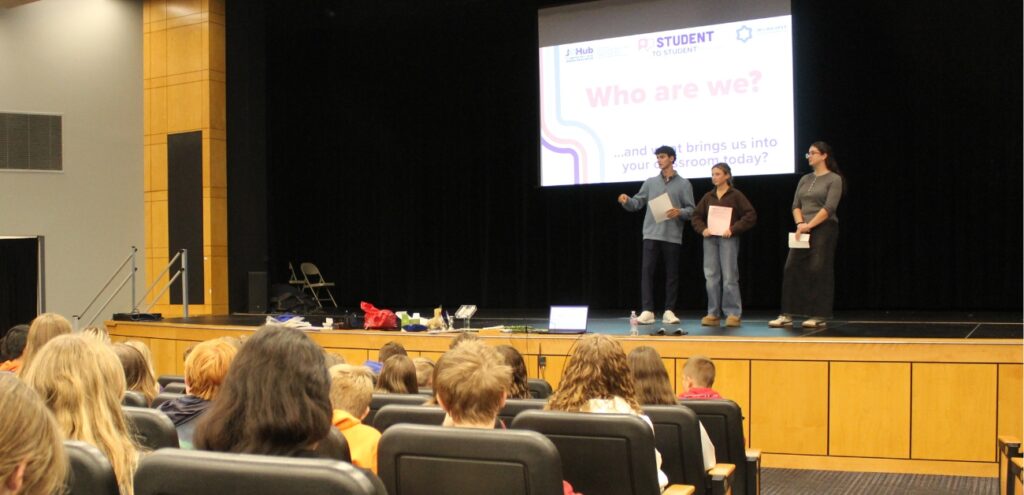
FREDONIA – Joey, 17, stood on a high school stage, next to a chuppah, before a very not-Jewish audience of dozens of teenagers, and explained the breaking of glass at a Jewish wedding.
“Even in our happiest moments, we still remember that there’s brokenness in the world, like the destruction of the Temple in Jerusalem, but it officially marks the end of the ceremony and then the start of like the wedding party or the wedding celebration.”
After a glass was crushed underfoot, he had an auditorium of seated Northern Ozaukee School District students repeat after him: “Mazel tov!”
It sounded a lot like a wedding, the kids having fun with it.
Besides pretending to be at a wedding, the students of Northern Ozaukee also learned that a teen may make challah with friends or read from the Torah at a bar mitzvah, and even that Jews can have different views from one another on afterlife. It all happened because Joey and two other Wisconsin Jewish students were there, on Oct. 9., to share knowledge of Jewish life with their non-Jewish peers, part of the Student to Student program.
Student to Student is a collaboration among Nathan and Esther Pelz Holocaust Education Resource Center, the Jewish Community Relations Council, the Coalition for Jewish Learning, and J-Hub, all programs of Milwaukee Jewish Federation. Funding for Student to Student was provided by the Irving L. Chortek Charitable Fund in Memory of Robert and Jennie Chortek Donor Restricted Fund.
The purpose of the program
“Student to Student is an opportunity for Jewish high school juniors and seniors to formalize their role as Jewish educators that they probably have on a day-to-day basis when surrounded by non-Jewish peers, and that formal role takes place in other area schools that do not probably have exposure to Jewish tradition, Jewish students, etc., beyond their state mandated Holocaust classes,” said Dalilah Conen, director of teen initiatives for Milwaukee Jewish Federation.
“And so this gives an opportunity for students to learn from their peers or peer-aged people about what Jewish identity, Jewish tradition, culture, looks like today for people that they can relate to and allows them to have context for Judaism beyond the Holocaust. Our students do this through engaging, interactive presentations where they pass around artifacts and props and Jewish ritual items.”
They introduce them to what challah tastes like and what it means for food to be kosher. And they also host a question-and-answer portion for the students. “It really gives both the teens and their peers an opportunity to strengthen their relationship to Jewish identity, to Jews and to increase allyship to the Jewish community as well,” Conen said.
It’s her personal belief that a lot of antisemitism stems from ignorance and lack of exposure. For her, this program is a solution. Student to Student has existed in other Jewish communities, but it was only introduced in Milwaukee last year. This year, it’s on track to present at nine schools or more in Wisconsin.
Conen championed bringing the program to Milwaukee because as someone who grew up in Tallahassee, Florida, she knows what it’s like to be a rare Jew in school.
“I was asked so many ignorant questions from very well-meaning people,” she said. “But this process wasn’t happening in a place that felt inviting; these conversations were happening in bathrooms, like on school buses, not on a stage in front of a class in an auditorium. I would have loved that.”
“It’s safe to know that it’s a school-sponsored program, that you’re there on purpose.”
A visit to Ozaukee
In all, three Jewish students stood on the auditorium stage at the Northern Ozaukee School District, during their Oct. 9 visit – Joey, a Nicolet High School student from Fox Point; Libby, 17, a Homestead High School student from Mequon and Shani, 17, a Bader Hillel High student from the West Side.
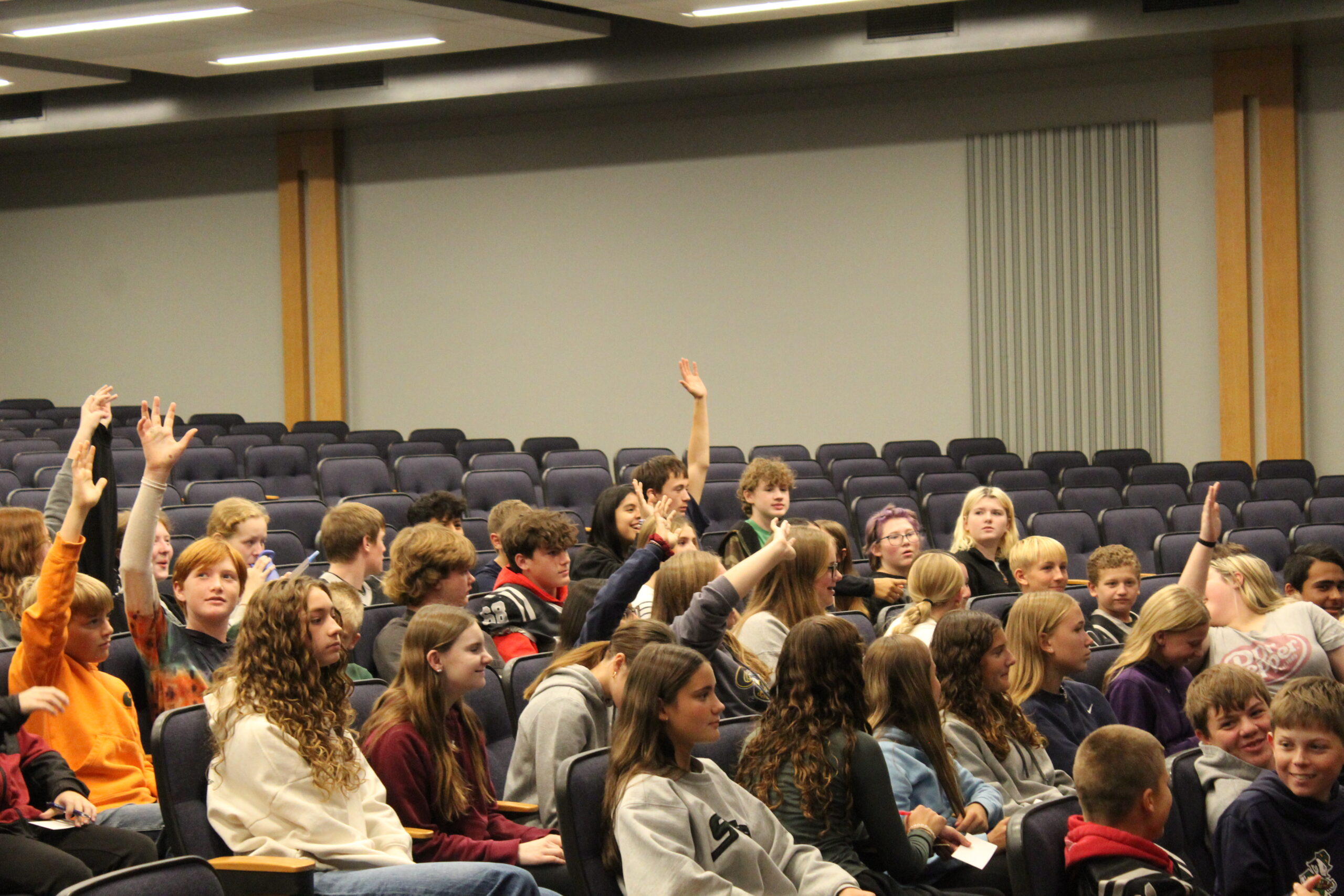
Students wrote down questions on note cards for the Jewish students to answer. One asked about the Star of David. “I’ve got a necklace with the Star of David,” responded Joey, pulling it up from his neck and explaining the significance.
Another question: “Do you have to wear specific clothes?” Yes and no, said Shani, explaining that there are different Jewish movements and the concept of modesty among the more observant.
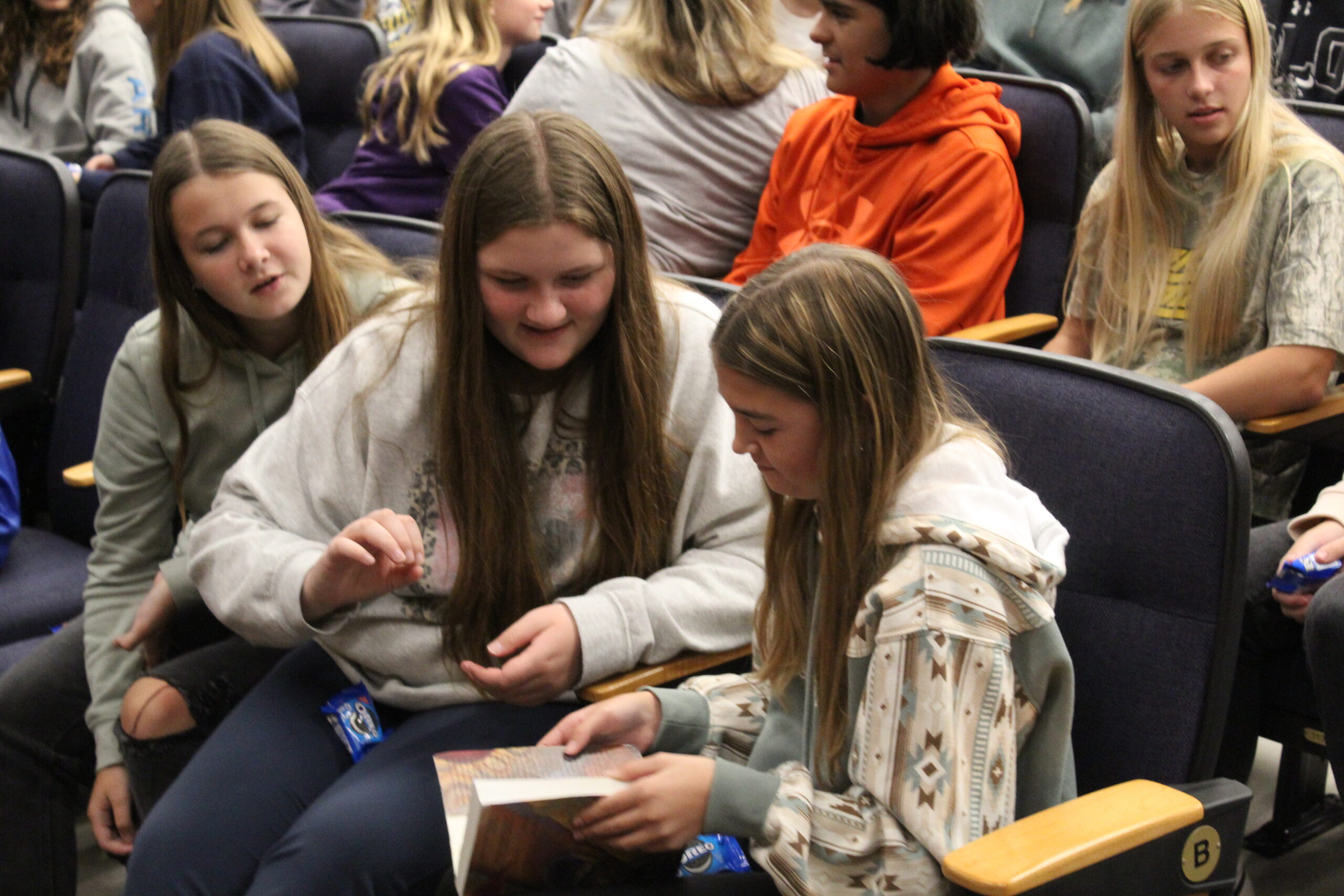
A Harry Potter novel in Hebrew was passed around the audience and one student asked, “Why are the books backwards?” Libby admitted she didn’t really have an answer to that one, adding: “It’s just the way that our alphabet was read, wrote, written, and it was just written backwards compared to the English language.”
Another note card from an Ozaukee student asked: “What made you want to start speaking at schools?”
Joey answered: “This is my second year doing Student to Student, which is the program that we’re with, but I’ve been volunteering in the Jewish community for as long as I can remember. My parents are both Jewish, and getting the opportunity talk to students like you guys, and tell them about what it’s like to be Jewish and show you that not every Jew is the same person. We all are just like you guys.”
“It’s been an awesome experience, coming to schools like this, talking to students like you guys, and teaching you guys about what it really is like to be Jewish. So you can kind of put a face to Judaism and know that we’re all we’re all very similar.”
At the end of the presentation, the student audience cheered for the three visitors.
* * *
* * *

* * *
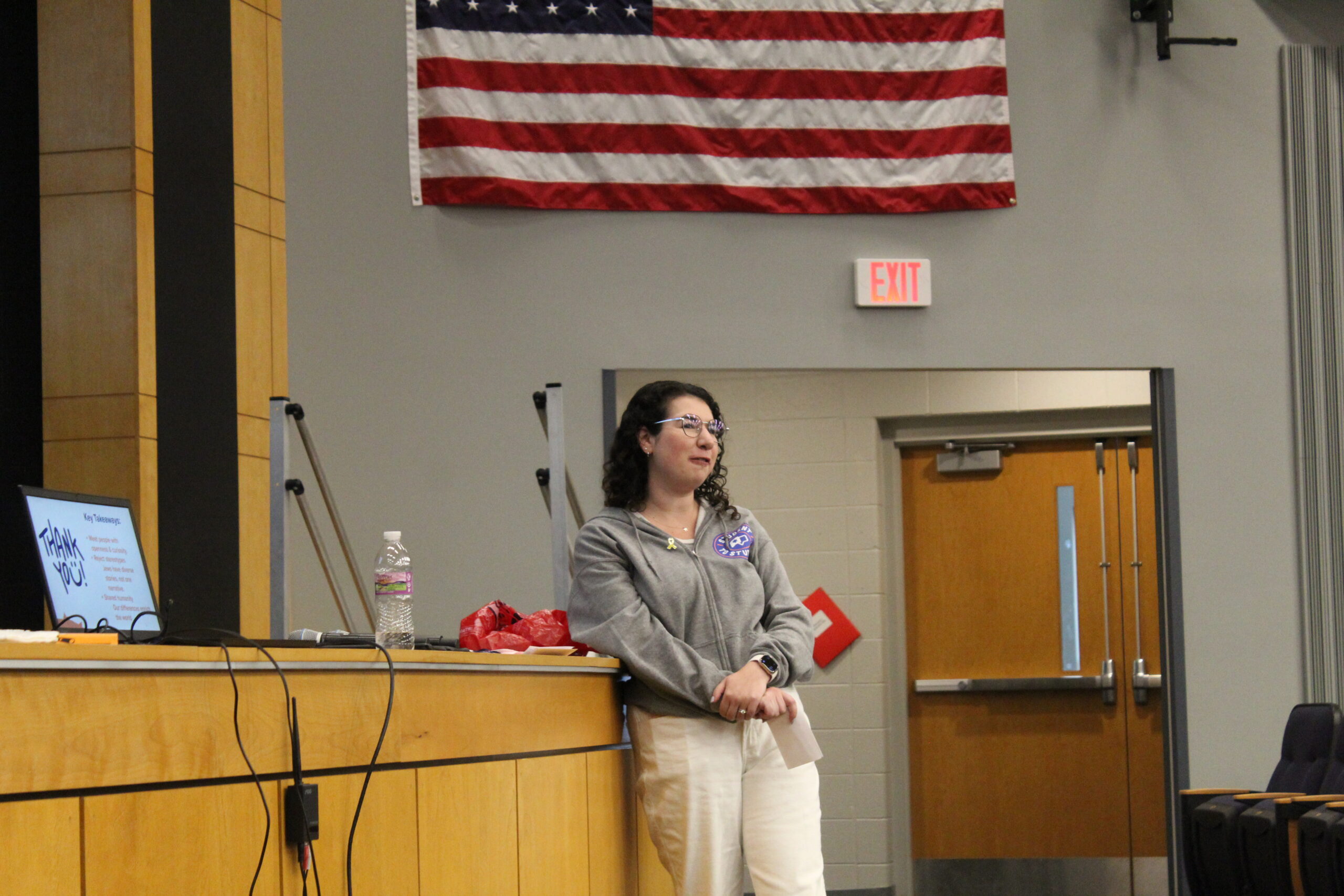
Dalilah Conen, director of teen initiatives for Milwaukee Jewish Federation, at a Student to Student visit to Ozaukee County on Oct. 9.
* * *

* * *
* * *


 Loading ...