

In this historic moment, two years after the massacre of our people in Israel by a genocidal, Islamist terrorist force, a tenuous ceasefire agreement has been joined by multiple countries. We anxiously await the implementation of President Trump’s 20-point plan to bring lasting peace to the region. It is neither a victory for Israel, nor a defeat for Hamas. Just reality setting in.
In the immediate aftermath, one cannot help but come to tears and be overwhelmed by emotion at seeing the 20 living hostages reunited with their families. The Jewish people, first and foremost, stand for life, and will go to great lengths, pay almost any price, for their freedom. The joy felt after two years of bloody war ceasing, at least for right now, is palpable.
Yet, the “day after” begets the next chapter in the 100 yearslong Israeli Arab conflict. As Winston Churchill once said, “This is not the end. It is not even the beginning of the end. But it is, perhaps, the end of the beginning.”
Over the last two years, Israel has succeeded in dramatically improving its security situation on several fronts, especially in the north. Blows delivered to Hezbollah and the fall of the Assad regime have broken the stranglehold that Iran had on the Jewish State. The Abraham Accords held, and the Arab street was relatively quiet while the IDF pummeled Hamas in Gaza.
With the Trump administration, weapons and armaments were no longer embargoed, maneuverability on the battlefield was no longer handcuffed, pressure was put on Hamas, and Israel could afford to take the chance on diplomacy. Sadly, this was not the case during the first year of the war.
In the end, it was President Trump who pushed audacious action to force the release of the hostages. He did not believe the war should go on any further, saw diminishing returns, and pressured all sides to make a deal. Because the U.S. relationship is crucial for Israel, even the “most right-wing government in Israeli history” got on board and put their trust in President Trump, approving a ceasefire that could be considered favorable to Israel.
How will American Jewry adapt to the next chapter? I don’t expect the overwhelmingly liberal Jewish diaspora to embrace President Trump, yet alone put their trust in him. But I believe the events since Oct. 7 led many Jews to question the orthodoxy of progressive and leftist beliefs, as they pertain to the Jewish people and the future of Jews in the West.
Chronicle readers may be familiar with Shabbos Kestenbaum, the young Harvard graduate who filed suit on behalf of the Jewish student body whose rights were violated in the aftermath of Oct. 7. The day he turned 18, he registered as a Democrat, voted for Bernie Sanders, and organized for Biden/Harris on campus in 2020. Yet four years later, he spoke passionately at the Republican National Convention in Milwaukee for … Donald Trump.
Of course, we all know what changed. Immediately after Oct. 7, he watched as Harvard faculty could not bring themselves to condemn the atrocities, and the tide of antisemitism surged worldwide. He concluded that the far left had abandoned the Jewish people.
Polls show support for Israel among Democrats has dropped precipitously. That is not to say the right doesn’t also have a problem. There are quite a few cranks within our ranks (think Marjorie Taylor Greene, Tucker Carlson and Candace Owens) who question U.S. support for the Jewish state. However, the Republican Party is solidly pro-Israel and firmly ascribes to the belief that Jewish values are American values.
Kestenbaum reflects that BOTH major political parties must understand that the Jewish attachment to the land of Israel is essential to our religious expression. Denying the Jewish People their connection to Zion is unquestionably antisemitic.
Over the last decade, the Jewish Diaspora has become frayed. In 2024, a significant minority of American Jews backed Donald Trump at the risk of being denounced by our fellow co-religionists. Rather than tolerance, we were vilified.
Ironically, we watched as Jewish women were denied participation at the Women’s March because they would not denounce their Zionism, and as college students became afraid to speak up in class and on campus for fear of retribution, because they support Israel. We heard the constant refrain that it was Netanyahu’s war, apparently in the hope that he personally would be blamed for “genocide” or “apartheid” or “oppression” or “occupation,” rather than all Jews.
This is ideological poison. It is incumbent on conservatives to try to persuade fellow Jews that as long as the Democrats are beholden to the Left, they will take us to a very bad place, much worse than MAGA.
Above all, the Jewish people must become united once again. Unity is our strength. I am encouraged by two Democrats in particular, Sen. John Fetterman of Pennsylvania and Rep. Ritchie Torres of New York, who displayed steadfast support for Israel over two long years. Far too few.
As a member of the Republican Jewish Coalition, it is my hope we see the return of a good faith bipartisan “wall of strength” with Democrats on behalf of Israel, a steadfast U.S. ally, with no daylight that our enemies can exploit. We should all ask ourselves, am I willing to meet others halfway? Can we put our differences aside?
With unity of our cause, this cold ceasefire may turn into the aspirations expressed by President Trump of a peaceful Middle East. For now, neither outcome desired by left or right is close to fruition. For now, reality wins.
The Chronicle publishes a variety of opinion articles, including this one, which are not necessarily representative of the views of this newspaper or its publisher.
* * *
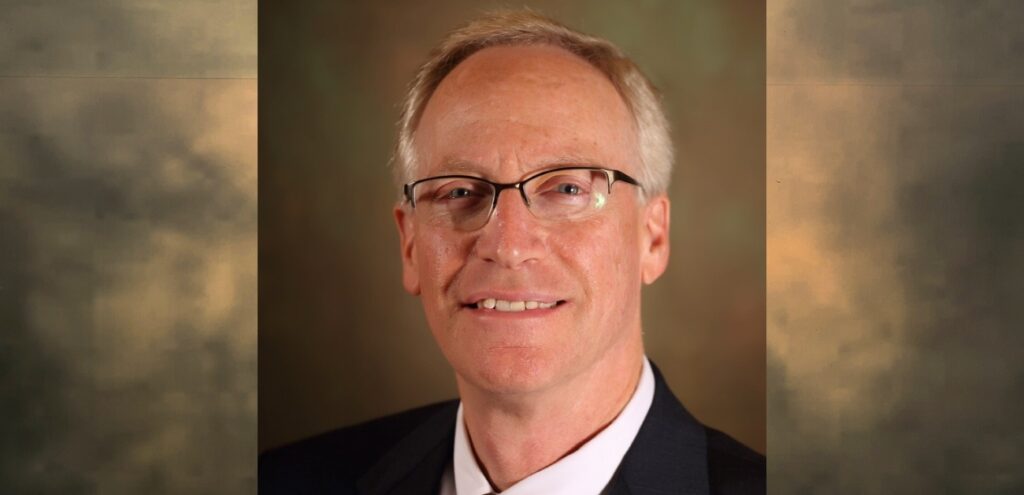
Andy Palec is a member of the Republican Jewish Coalition Leadership Council and lives in Wauwatosa. He works in commercial real estate and writes about politics and foreign affairs.
* * *
Free at last
With the release of 20 living hostages from Gaza last month, accompanied by at least a temporary ceasefire, several local people are offering their thoughts at this moment in history. See articles throughout this edition.

 Loading ...